.png)

How to Align Your Personal Style with Your Brand Identity
Your personal style speaks before your introduction does. In professional and social settings alike, people form impressions from silhouette, grooming, colour, posture, and the level of care visible in your presentation. When those signals support who you are and how you want to be known, your presence feels convincing. When they clash, even strong credentials can arrive with less impact than they deserve.
Aligning style with identity is not about becoming polished for its own sake, nor about copying a trend, a dress code, or someone else’s public image. It is about making your outward presentation a coherent extension of your values, standards, expertise, and ambition. Done well, it turns style into a practical asset: something that reinforces trust, recognition, and confidence every time you enter a room.
Why Personal Style and Brand Identity Must Work Together
First impressions are built through visual coherence
People rarely separate what they see from what they assume. If your work is precise, high-level, and detail-driven, but your presentation feels careless or confused, others register that tension immediately. The same is true in reverse. A highly polished appearance that suggests authority can feel hollow if it is not supported by the substance of your role, communication, and conduct. The goal is not perfection. It is coherence.
Personal style is one of the clearest ways to make your brand identity legible. It helps others understand whether you are classic or contemporary, discreet or expressive, formal or relaxed, visionary or measured. Those distinctions matter because they shape how people frame your credibility. Style cannot replace expertise, but it can support the way expertise is perceived.
Misalignment creates unnecessary friction
Many people sense that something is off in their image long before they can name it. They may own good clothes, invest in grooming, or follow accepted dress codes, yet still feel visually disconnected from the person they are trying to become. Often the problem is not quality. It is inconsistency. Their wardrobe says one thing, their role requires another, and their personality suggests a third.
That friction tends to show up in subtle ways: hesitation in high-stakes meetings, discomfort in photographs, uncertainty about what to wear for public appearances, or a feeling that their look is either too generic or too performative. Alignment removes that drag. It gives you a dependable visual language that supports your identity instead of distracting from it.
Define Your Brand Identity Before You Define Your Look
Start with the qualities you want to be known for
The most effective style choices are made from the inside out. Before deciding on colours, labels, or silhouettes, define the qualities you want your presence to communicate. Consider a small set of words that genuinely reflect both your personality and your ambitions. You might choose terms such as composed, intelligent, discreet, modern, warm, exacting, creative, or authoritative.
These words should not describe a fantasy version of yourself. They should describe the most refined and intentional version of who you already are. That is why a disciplined brand strategy is useful: it helps you decide what your image should communicate before you start changing the surface details.
Consider audience, environment, and cultural context
Brand identity does not exist in isolation. It lives in relation to the people you influence and the environments you move through. A barrister, a founder, a private wealth adviser, and a creative director may all value credibility, but credibility will look different in each context. In the UK especially, dress codes often carry a subtle language of understatement. Presence is often judged not by how loudly you signal importance, but by how assuredly you carry standards without overstatement.
Ask yourself a few practical questions:
Who needs to trust me quickly?
What assumptions do I want my appearance to confirm or challenge?
Where do I need to project authority, and where do I need to feel approachable?
What level of formality is native to my industry, and where can I refine it?
Those answers form the foundation of a personal style that feels intentional rather than decorative.
Translate Brand Identity into Visual Cues
Colour, cut, and texture do much of the work
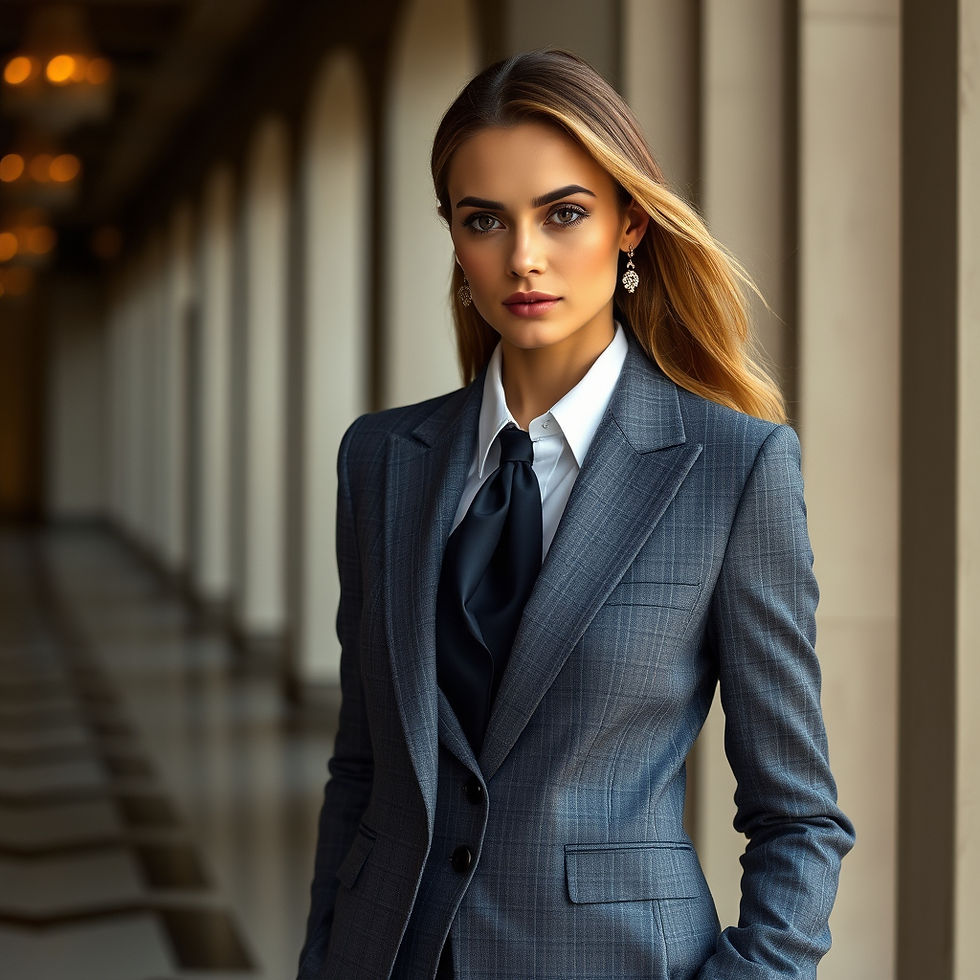
Once your identity is clear, the next step is translating abstract qualities into visible choices. If your brand is grounded in calm authority, cleaner lines, strong tailoring, deeper neutrals, and restrained contrast may serve you well. If your identity is more creative and dynamic, you may introduce more shape, more texture, or sharper points of interest. If discretion is central to your image, a quieter palette and superior fabrication often communicate more than trend-led styling ever could.
This is where many people overcomplicate the process. You do not need a dramatic reinvention. You need pattern recognition. Repetition of the right cues builds recognition over time. A consistent colour family, a preferred silhouette, a certain level of finish, and a clear standard of grooming will often do more for your image than a constantly changing wardrobe.
Details determine whether the message feels credible
Accessories, footwear, eyewear, grooming, and garment condition all carry meaning. A refined watch, polished shoes, beautifully maintained hair, or a well-chosen coat can reinforce a sense of discipline and standards. Equally, poor fit, visible wear, cheap-looking finishes, or cluttered styling can weaken the impression you intended to create.
The aim is not to signal wealth or status in an obvious way. It is to communicate taste, care, and congruence. In personal branding, details are often what distinguish presence from mere presentation.
Brand quality | Style expression | Usually best avoided |
Authoritative | Structured tailoring, clean lines, polished footwear, restrained palette | Overly casual shapes, distracting novelty, poor fit |
Approachable | Softer textures, lighter contrast, open silhouettes, relaxed refinement | Severe styling, rigid formality in every context |
Creative | Thoughtful colour, distinctive accessories, shape or texture with control | Random experimentation with no recurring signature |
Discreet luxury | Exceptional fabrics, subtle finishing, understatement, impeccable maintenance | Visible excess, loud branding, trend chasing |
Build a Personal Style System, Not a Costume
Create signature elements you can repeat
A strong personal image is rarely built on one standout outfit. It is built on a system. That system might include your go-to jacket shape, your preferred trouser cut, a dependable colour palette, your standard level of grooming, and the accessories that feel most like you. These recurring elements become your signatures. They make getting dressed easier while also making your presence more memorable.
Signatures work because they reduce visual noise. Instead of reinventing yourself for every event, you refine a recognisable version of yourself that travels across settings. This is especially useful for professionals whose visibility is increasing. When people see consistency, they register self-knowledge.
Allow range without losing identity
Consistency does not mean uniformity. You need enough flexibility to move between meetings, social occasions, travel, speaking engagements, and everyday life without looking like you are wearing a costume. The style system should hold together across different levels of formality. A person known for clarity and polish should still look like that in knitwear, smart casual attire, or evening dress.
For many clients refining a personal brand in the UK, The Refined Image approaches this as a matter of editing rather than exaggeration. The most effective transformation often comes from removing what confuses the picture and strengthening what already feels authentic.
Dress for the Rooms You Want to Influence
Leadership settings require quiet authority
Your wardrobe should not only reflect your current life. It should support the level of influence you want to hold. If you are stepping into more visible leadership, handling higher-value relationships, or representing your work publicly, your style needs enough structure and assurance to meet those moments. This does not require stiffness. It requires readiness.
Quiet authority is often more powerful than visible effort. Well-cut clothing, thoughtful restraint, and a sense of ease under pressure suggest command. In contrast, dressing too casually for serious moments can make you appear less prepared, while dressing too aggressively can create distance where trust is needed. The most persuasive image is one that looks considered without looking self-conscious.
Digital visibility needs the same level of discipline
Many people separate their in-person presentation from their digital one, but audiences do not. Your profile photos, speaking clips, event imagery, and social presence all contribute to brand identity. If your online image feels dated, inconsistent, or disconnected from how you appear in person, recognition suffers.
Think about how your style reads on camera as well as in a room. Contrast, fit, grooming, and fabric behave differently under lighting and through lenses. A personal brand becomes stronger when the same visual principles are visible across portrait photography, public appearances, and daily professional life.
Make Sure Style Matches Voice and Behaviour
Style is only credible when language supports it
An elegant appearance cannot carry a confused message. If you want your style to communicate authority, discernment, or warmth, your words need to sustain that impression. The way you introduce yourself, write emails, contribute in meetings, and speak publicly all either confirm or weaken your visual identity.
For example, a highly refined image paired with hesitant communication can make you seem over-prepared but underpowered. Equally, a deliberately relaxed style paired with cold or overly formal language may feel mismatched. Strong personal branding comes from alignment between visual choices and verbal tone.
Body language and etiquette complete the picture
How you move in your clothes matters almost as much as the clothes themselves. Posture, pace, eye contact, hand gestures, and listening habits all affect how style is interpreted. Someone can be beautifully dressed and still appear uncomfortable, defensive, or distracted. In that case, the wardrobe is working harder than it should.
Good etiquette also signals refinement. Arriving prepared, being punctual, respecting the tone of the occasion, and handling introductions with ease all contribute to personal presence. Style is most effective when it feels lived in and supported by behaviour, not simply arranged in front of it.
Edit What Is Undermining Your Image
Look for the disconnects, not just the gaps
People often assume they need more clothing when what they really need is sharper editing. Begin by identifying what undermines your intended brand identity. This may include garments that no longer fit properly, colours that make you disappear, pieces that feel too trend-driven, or items that belong to an earlier phase of your life. It can also include practical issues such as worn shoes, tired handbags, old headshots, or inconsistent grooming.
The key is to assess your image as a complete system rather than a collection of separate purchases. One excellent jacket cannot offset a generally careless presentation. Likewise, one refined accessory cannot rescue an outfit whose shape, fit, and condition are all sending a different message.
A practical style alignment checklist
Review your current wardrobe: remove anything that feels off-brand, ill-fitting, or visibly tired.
Identify your visual constants: note the colours, cuts, and fabrics in which you look most assured.
Check for consistency: compare your in-person look with your online photos and public-facing materials.
Refine grooming standards: hair, skincare, tailoring, shoe care, and garment maintenance all matter.
Dress for your next level: build around the rooms, roles, and relationships you want to grow into.
Repeat what works: once a strong formula emerges, make it easier to sustain rather than starting over.
This kind of audit is often more valuable than a shopping list. It clarifies not only what to buy, but what to stop wearing, what to repair, and what to repeat more confidently.
Let Your Style Evolve as Your Brand Grows
Identity should deepen, not become rigid
Personal style should evolve as your responsibilities, confidence, and visibility change. The version of you that was right for early career, private practice, creative experimentation, or a quieter phase of life may not be the version that best serves you now. Evolution is healthy when it reflects growth rather than insecurity.
The strongest personal brands are not static. They mature. Fabrics improve. Cuts sharpen or soften with intention. Colour becomes more selective. Accessories become more meaningful. The overall effect is not reinvention for attention, but refinement for clarity.
Refinement is a long-term discipline
When style is aligned with identity, getting dressed stops being a daily negotiation. It becomes a dependable expression of standards. That is the real value of thoughtful presentation: not vanity, but consistency. You know what you stand for, and your appearance supports that understanding without strain.
In the end, personal style works best when it feels like visible integrity. It should help people see the same qualities in your appearance that they encounter in your thinking, your conduct, and your work. When that happens, your image does not compete with your reputation. It strengthens it. That is where brand strategy becomes genuinely useful: not as performance, but as a clear and refined expression of who you are.


Comments