.png)

How to Use Visual Storytelling in Your Personal Brand
People form impressions long before they read a biography, hear a keynote, or understand a set of credentials. They notice the portrait first. Then the wardrobe, the setting, the colours, the posture, the way a website feels, and whether every visible detail seems to belong to the same person. That is the power of visual storytelling in a personal brand: it turns abstract qualities such as judgement, confidence, sophistication, warmth, or authority into something immediately legible.
For professionals building a serious reputation, visual storytelling is not about vanity or surface polish. It is about coherence. When your image, environment, and visual choices support the position you want to hold, people understand you faster and remember you longer. A strong personal brand identity is rarely built through words alone; it is reinforced by what others can see, absorb, and intuit in a matter of seconds.
Why Visual Storytelling Matters for Brand Identity
Visual storytelling gives shape to perception. It helps people understand not just what you do, but who you are, how you work, and what standard you represent. In personal branding, that matters because trust is often formed through a pattern of signals rather than a single statement.
At its best, visual storytelling gives your brand identity a recognisable shape. It creates continuity between your public image and your professional promise, so your presence feels considered rather than accidental.
First impressions are rarely neutral
Whether someone finds you through LinkedIn, a media feature, a conference programme, or a private introduction, they begin reading you visually. If the image they encounter feels misaligned with your level, sector, or ambitions, they will fill in the gaps themselves. If it feels precise, composed, and authentic, they are more likely to assume substance before a single conversation takes place.
Visual cues communicate positioning
A founder in a highly creative field may benefit from a more directional visual style. A private adviser may need discretion, restraint, and quiet confidence. A luxury entrepreneur may need to project refinement without becoming overtly performative. The goal is not to look impressive in a generic way. The goal is to communicate the right kind of credibility for your specific role, audience, and level of influence.
Begin With the Story, Not the Aesthetic
One of the most common mistakes in personal branding is starting with mood boards before clarifying the message. Beautiful visuals can still fail if they are not anchored to a clear narrative. Before choosing photography, wardrobe, or visual direction, define the story your presence should tell.
Identify the qualities you want to be known for
Choose three to five attributes that reflect both your current standing and your intended positioning. These might include authority, discretion, modernity, warmth, discernment, innovation, or elegance. Be honest. If the words are aspirational but unsupported by your current work and manner, the visuals will feel theatrical. The most effective personal brand stories stretch you slightly, but they remain believable.
Consider the audience reading those signals
Your visual language should be designed for the people whose trust matters most. Investors, board peers, high-net-worth clients, editorial gatekeepers, and luxury consumers do not all read the same cues in the same way. Ask yourself what your audience needs to feel when they encounter you. Reassured? Energised? Safe? Inspired? Certain of your expertise? Visual storytelling becomes sharper when it is built around the emotional response you want to create.
Write a simple visual positioning statement
A useful internal prompt is this: When people see me, they should immediately sense... Finish the sentence in one line. For example: calm authority with modern polish; understated luxury with intelligence; creative confidence grounded in discipline. That sentence becomes a filter for every visual decision that follows.
Create a Distinct Visual Language
Once your story is clear, you can translate it into a visual system. This is where visual storytelling becomes practical. Rather than thinking in isolated pieces, think in elements that recur across photography, social imagery, event appearances, and digital profiles.
Use colour deliberately
Colour affects tone faster than almost any other visual cue. Deep neutrals can suggest steadiness and sophistication. Crisp monochrome often feels sharp and editorial. Earth tones can imply grounded warmth. Jewel tones may convey confidence and richness when used with restraint. You do not need an elaborate palette, but you do need consistency. Repetition builds recognition.
For many personal brands, especially at senior or luxury levels, a restrained palette often works better than trend-driven colour choices. This does not mean dressing blandly. It means selecting tones that support your presence instead of overpowering it.
Think beyond clothing
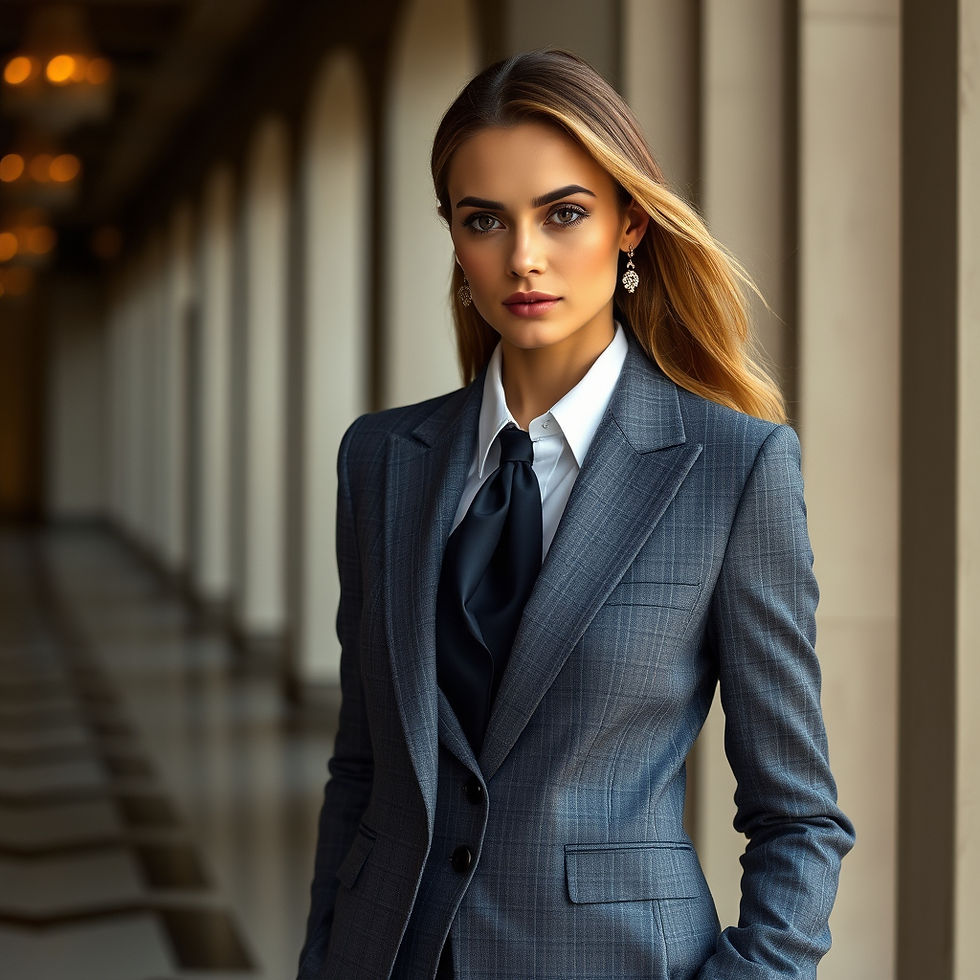
Wardrobe matters, but so do fabrication, texture, grooming, accessories, and silhouette. A beautifully cut jacket says something different from a casual blazer that almost fits. Fine jewellery, a watch, eyewear, or a signature scarf can become part of your recognisable visual language if used consistently and appropriately. Small details often carry more sophistication than obvious statements.
Direct your photography with intention
Strong personal brand photography is not just flattering; it is strategically varied. You need more than one good headshot. Consider a suite of images that shows different dimensions of your role:
Direct portraiture for credibility and recognition
Environmental images that show context and taste
Speaking or working images that demonstrate authority in action
More relaxed frames that reveal warmth and approachability
The best image sets feel editorial rather than staged. They reveal consistency without looking repetitive.
Align Image, Environment, and Digital Presence
Visual storytelling becomes powerful when it extends beyond the individual and into the surroundings associated with that individual. Your environment is part of your narrative. It can either deepen your positioning or dilute it.
Choose settings that reinforce your level
A sophisticated office, a carefully chosen hotel lounge, a well-designed home study, a members' club, a gallery, or a refined urban backdrop can all communicate something meaningful. The point is not aspiration theatre. The point is contextual alignment. If your work depends on privacy and trust, intimate and elegant settings may serve you better than loud public environments. If your work is public-facing and dynamic, movement and scale may support your image more effectively.
Audit your digital touchpoints
Your website, LinkedIn banner, profile photo, podcast artwork, speaker bio page, and press images should all feel as though they belong to the same person. Many professionals invest in one excellent photoshoot, then undermine it with outdated thumbnails, inconsistent cropping, mismatched colours, or casual event images that send a different message. A polished personal brand is built through continuity across touchpoints.
Pay attention to what sits in the background
Bookshelves, artwork, lighting, furniture, desk styling, and even the quality of your video call frame matter more than most people realise. Background details can subtly signal culture, discipline, taste, and seriousness. They can also create distraction. If a visual element does not support the story, remove it.
Use Repetition to Build Recognition
Visual storytelling works through pattern. One strong image can create interest, but repeated visual consistency creates recognition. Over time, people begin to associate certain cues with your name and your standard.
Create signature elements
Signature does not mean gimmick. It means identifiable consistency. This might be a particular silhouette, a recurring tone, a calm photographic style, a specific way of appearing on stage, or a recognisable balance between elegance and restraint. The strongest personal brands often look unmistakably themselves without appearing overly curated.
Keep the tone stable across contexts
You should still look like the same person in a keynote photo, a magazine profile, a networking event, and a private client meeting. The degree of formality may change, but the underlying tone should remain intact. If your public image is highly polished but your day-to-day presence feels careless, the gap will weaken trust. If your style is too casual in every setting, you may unintentionally flatten your authority.
Show proof, not performance
Visual storytelling is most credible when it captures real behaviour and real environments. Speaking on stage, leading a discussion, reviewing materials, hosting thoughtfully, or moving through a well-chosen professional setting often says more than overtly aspirational posing. The image should suggest substance behind the styling. That is where visual authority begins to feel earned.
Tailor Your Visual Storytelling to High-Impact Moments
Not every platform asks for the same visual emphasis. The strongest personal brands know how to adapt without losing coherence. You are not creating different identities; you are adjusting the lens through which the same identity is viewed.
For LinkedIn and professional platforms
Clarity matters most. Use portraiture that is current, confident, and polished without seeming inaccessible. Supporting imagery should show your context and level, not clutter your presence. Think controlled, elevated, and credible.
For editorial features and public speaking
These moments call for stronger visual contrast and a slightly more defined point of view. Photographs need enough personality to hold attention at a glance while still supporting authority. Consider posture, gesture, and composition more carefully here, especially if you are positioning yourself as a thought leader or public voice.
For private client or high-trust environments
In more discreet circles, conspicuous display can work against you. Understatement often performs better than visible effort. Soft confidence, excellent fit, quality materials, and calm visual discipline create a more persuasive impression than overt luxury cues.
A simple preparation checklist
Define the audience for the appearance or platform.
Choose the one impression you most want to create.
Select wardrobe and setting that support that impression.
Remove visual distractions that conflict with your position.
Check whether the final image still looks like you on your best day.
For clients across the UK who want that level of alignment, firms such as The Refined Image are often valued not for making people look different, but for helping them look more intentional, more recognisable, and more fully themselves.
What Weakens a Strong Visual Narrative
Most personal brands are not weakened by a lack of effort. They are weakened by mixed signals. When image, message, and context do not match, people sense the inconsistency even if they cannot immediately name it.
Common visual mistakes
Using portraits that are too old or too heavily retouched
Dressing for aspiration rather than authentic positioning
Copying another person's aesthetic instead of developing your own
Ignoring the tone of the environment or audience
Creating beautiful images that have no connection to real work or real values
A quick way to diagnose misalignment
Visual choice | Possible unintended message | Refined adjustment |
Overly formal portrait in every context | Distant, rigid, inaccessible | Balance formal portraits with warmer environmental images |
Trend-heavy styling | Attention-seeking or inconsistent judgement | Anchor the look in timeless pieces and controlled accents |
Luxury cues used too obviously | Performance over substance | Let quality appear through fit, texture, and restraint |
Casual digital presence with premium offline positioning | Inconsistent standards | Bring online imagery up to the level of your real-world presence |
Generic stock-like photography | Low distinction, weak memorability | Use original images with stronger context and personality |
If people consistently misunderstand your level, your visual narrative likely needs refinement. The solution is usually not more content. It is better alignment.
Build Your Personal Brand Identity With Editorial Discipline
The most compelling visual storytelling is edited with care. Every strong personal brand has an element of selection behind it: what is shown, what is repeated, what is removed, and what is allowed to become part of the public picture. Editing is not artificial. It is disciplined.
Review your existing assets as a collection
Lay out your headshots, event photos, website imagery, social profile images, press appearances, and speaking photographs together. Ask whether they look as though they belong to one coherent individual. If not, identify the break points. Often the problem is not dramatic. It is small inconsistencies compounded over time.
Choose quality over quantity
You do not need a constant stream of imagery. You need a compact set of strong, versatile assets that can be used repeatedly across the right contexts. A smaller, more controlled visual archive often does more for a premium personal brand than frequent but inconsistent posting.
Let your image evolve as your position evolves
Visual storytelling should not remain frozen. As your responsibilities, market standing, audience, and lifestyle change, your image may need to become more formal, more streamlined, more editorial, or more discreet. Refinement is a sign of growth. Reinvention for its own sake usually is not.
Conclusion: Make Every Visual Choice Support Your Brand Identity
Visual storytelling is not an accessory to personal branding. It is one of the clearest ways your personal brand identity becomes visible, memorable, and believable in the real world. When done well, it helps people understand your standard before you have to explain it. It gives your presence shape, consistency, and emotional clarity.
The strongest approach is rarely the loudest. It is the most coherent. When your portraiture, wardrobe, environment, digital presence, and public moments all tell the same story, trust builds faster and recognition deepens over time. That is true whether you are an entrepreneur, executive, adviser, founder, or public-facing expert.
If you want to be taken seriously at a higher level, start by asking a simple question: what does your current visual presence say before you speak? The answer will tell you a great deal about the strength of your brand identity, and about what needs refining next.


Comments